Whether it is a traumatic road traffic accident along a national highway, a critical postpartum hemorrhage during childbirth, an intricate cardiovascular surgery, or chronic management for conditions like thalassemia, access to a safe and timely blood supply is often the only barrier between life and death.
Despite its critical importance, securing blood during a medical emergency in Nepal remains a chaotic experience for many families. When a crisis hits, family members are often forced to run between blood banks or rely on outdated contact numbers found online.
This guide breaks down the biological science of blood typing and explores how community action and digital platforms—led by Health Yaad Aayo (HYA)—are streamlining blood accessibility across Nepal.
Human blood is classified into distinct types based on the presence or absence of specific proteins called antigens on the surface of red blood cells. The two primary classification tools are the ABO System and the Rh Factor (which determines if your type is positive or negative).
YOUR BLOOD TYPE
Because mixing incompatible blood types causes an immune reaction that can be fatal, understanding blood type compatibility is essential for emergency medicine.
A common hesitation among potential donors is the fear of long-term weakness or blood depletion. However, the human body is remarkably resilient and designed for quick recovery:
To ensure a seamless, comfortable, and safe donation experience, donors should strictly adhere to standard clinical precautions:
Before the Donation
After the Donation
True to its mission as a comprehensive health platform, Health Yaad Aayo (HYA) has integrated blood donation mobilization into its operations since day one. Launching its services in December 2023, HYA prioritized systemic blood donation support as a core corporate value.
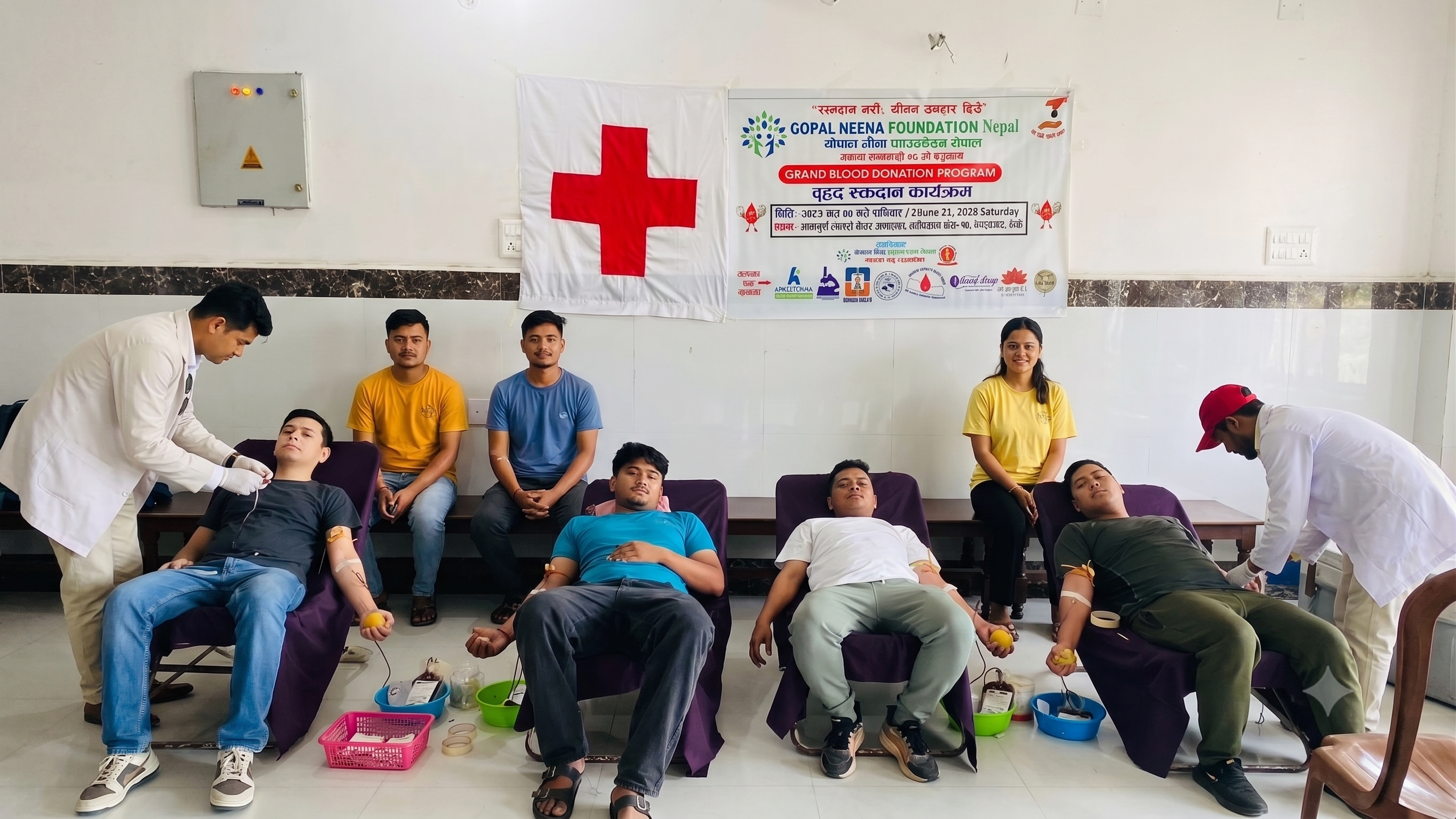
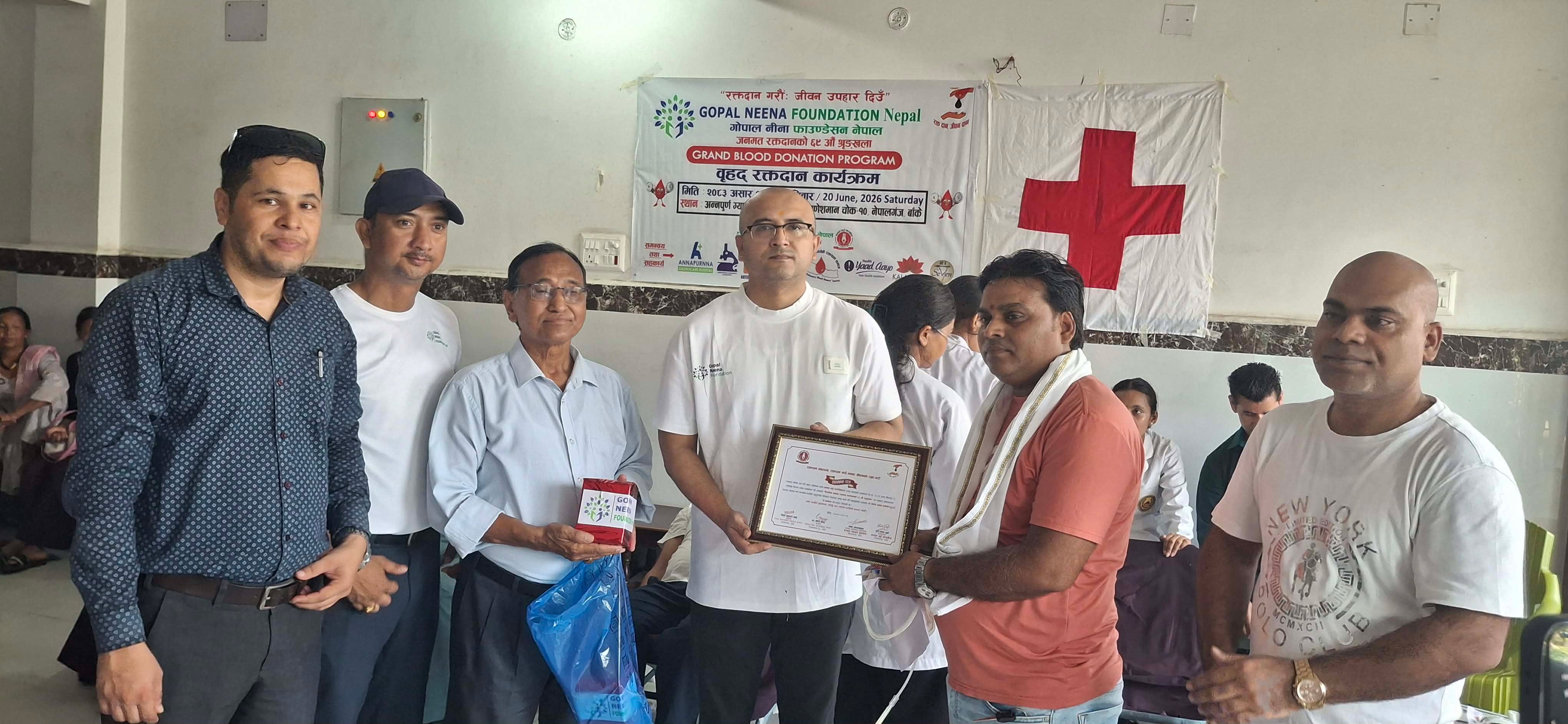
As highlighted in recent news coverage by different national newspaper, Health Yaad Aayo (HYA) acts as a dedicated Digital Health Partner in the ongoing "Janamat Blood Donation Campaign." Organized jointly by the Janamat Bi-weekly Newspaper (led by Editor Mr. Purna Lal Chuke) and the Gopal-Neena Foundation, this community campaign organizes a structured blood donation camp every 3 months.
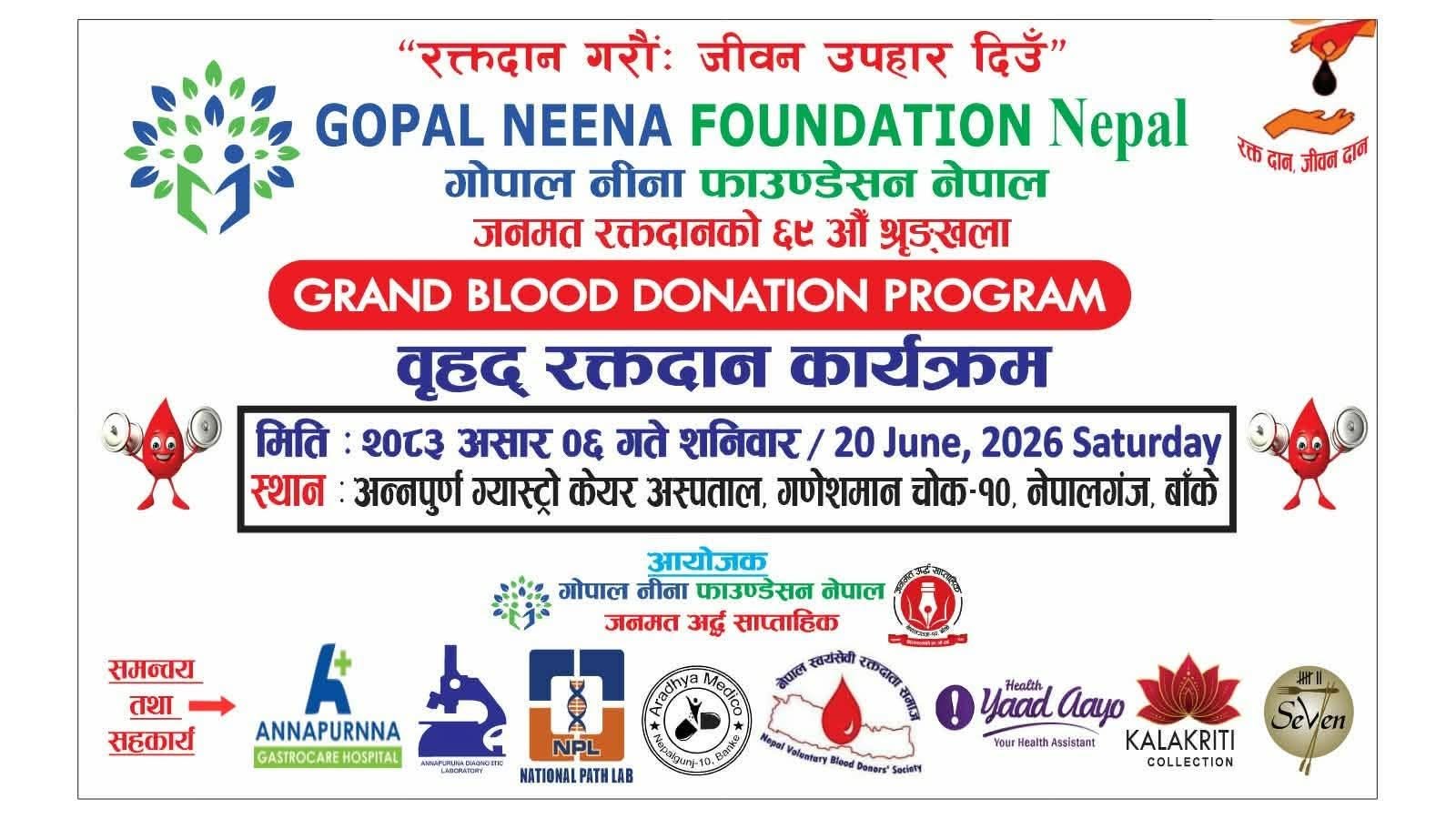
This 3-month schedule aligns perfectly with the biological timeline of blood regeneration, allowing regular donors to safely give back multiple times a year. This community campaign recently marked its historic 70th quarterly donation drive. From regional drives in Khajura to targeted health camps, HYA has continuously supported these grass-roots efforts in Banke District since December 2023, helping to bridge the gap between voluntary donors and regional blood transfusion centers.
Health Yaad Aayo is redefining how corporate organizations celebrate major milestones. Instead of traditional parties, HYA coordinates with leading organizations to turn corporate anniversaries into impactful community health initiatives.
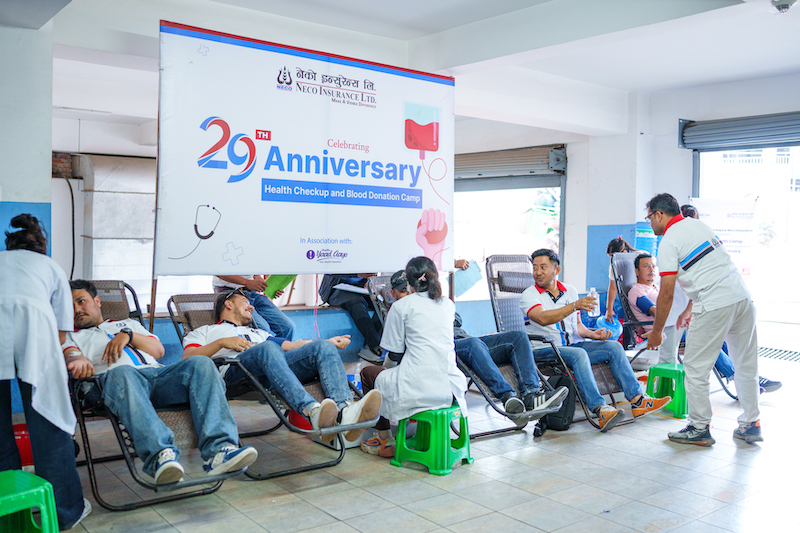
A prime example is the recent collaboration with Neco Insurance Limited on its 29th anniversary:
The Event: On its 29th anniversary, Neco Insurance Ltd. hosted a free community health screening and blood donation drive for its corporate staff.
The Strategy: Health Yaad Aayo served as the central digital health coordination partner, managing the logistical framework, pre-screening metrics, and connecting the event with top-tier hospital teams. This approach transformed a corporate celebration into a life-saving drive that collected dozens of blood pints for local blood banks.
6. Solving the "Dead Number" Problem: Verified Blood Bank Directory
During a medical emergency, every second counts. Unfortunately, a major problem facing families in Nepal is the accuracy of online information. A typical Google search for "Blood Banks in Kathmandu" or "Nepal Red Cross numbers" often returns disconnected lines, changed office locations, or unmonitored desks. This lack of reliable information creates panic when a patient's hemoglobin or platelet counts are dropping.
Health Yaad Aayo solves this issue through its Verified Blood Bank Directory.
Instead of relying on outdated web scraping, the Health Yaad Aayo team manually calls every registered blood bank across Nepal one-by-one every month.
This continuous verification process filters out dead numbers and confirms active phone lines. As a result, when users access the Health Yaad Aayo app during a crisis, they get real, working contact numbers to check blood bag availability instantly.
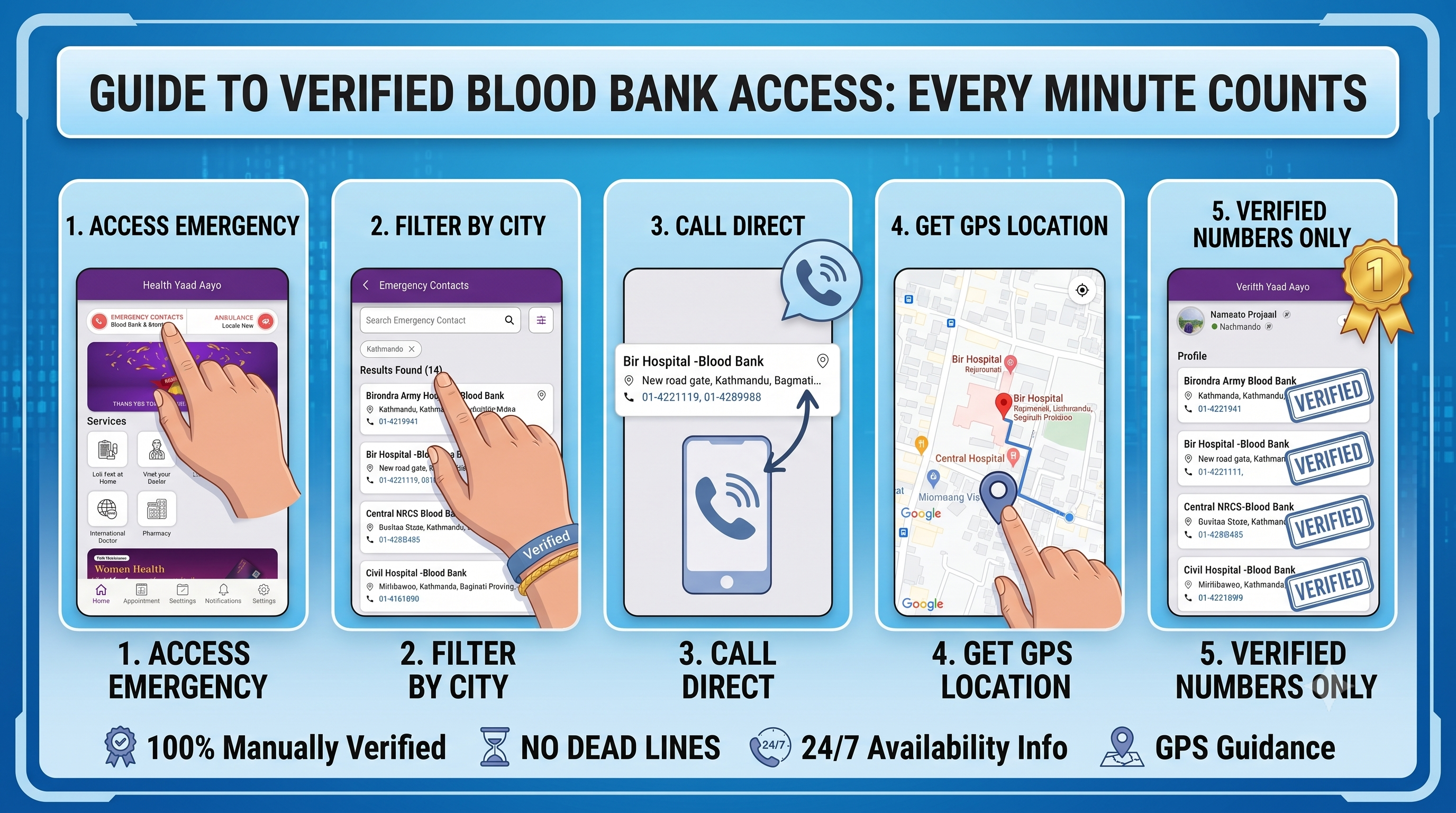
7. How to Find Verified Blood Bank Numbers in a Crisis
When a medical emergency strikes, panic shouldn't be compounded by dead phone lines or outdated web results. The Health Yaad Aayo mobile application provides a real-time, vetted directory designed for rapid action.
Follow these simple steps to locate resources, call facilities directly, and navigate to your destination:
Step 1: Open Emergency Contacts
Launch the Health Yaad Aayo app on your smartphone. On the main dashboard, tap the prominent red EMERGENCY CONTACTS (Blood Bank & Others) button located right at the top left of your screen.
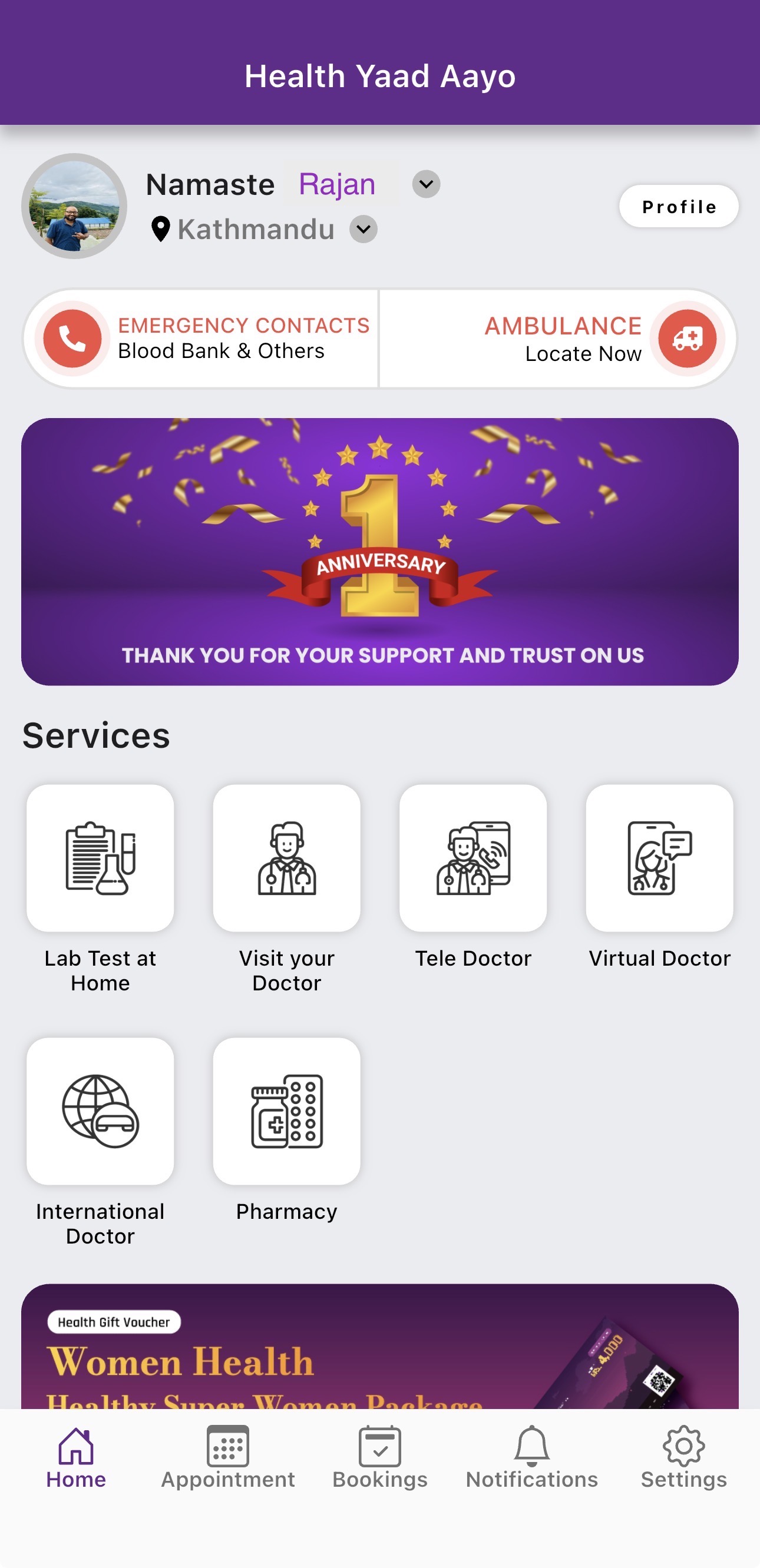
Once inside the emergency directory (shown in Image 1), you will see a search bar at the top of the interface.
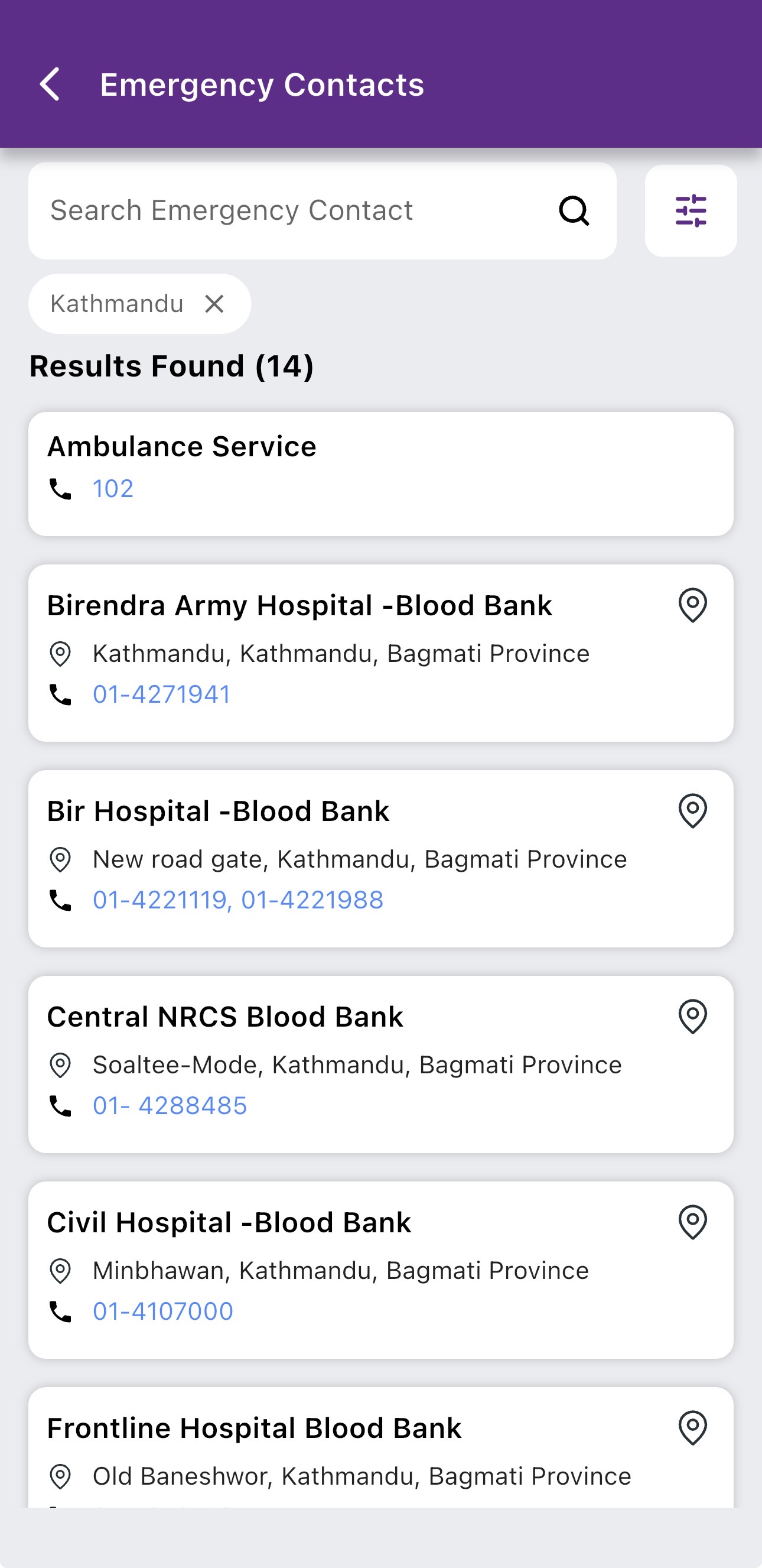
Every listing—such as Bir Hospital Blood Bank or Central NRCS Blood Bank—displays an active, manually verified phone number.
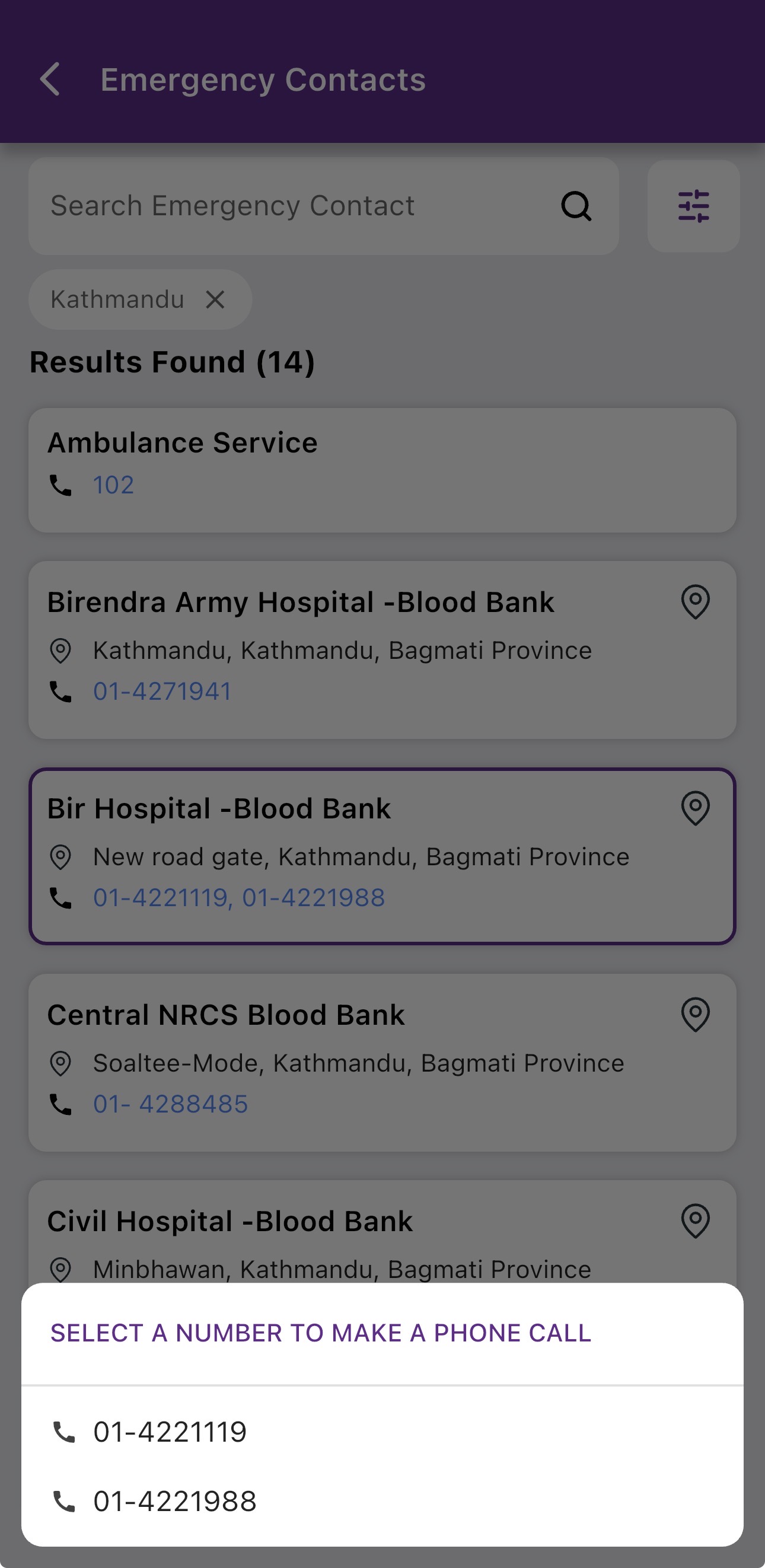
Getting the blood bag requires knowing exactly where to go. On the right-hand side of each blood bank listing, you will find a GPS pin icon.
Having access to verified health information shouldn't be an afterthought. Whether you want to donate blood at our next corporate camp or need to locate an active blood repository for a loved one, we are here to support you. Download the Health Yaad Aayo mobile application on iOS or Android, or visit healthyaadaayo.com to explore our verified emergency database, check upcoming donation schedules, and access on-demand healthcare support whenever you need it.